
S—03Polyaspartic coatings
Polyaspartic Coatings in Greater Phoenix
Understand the material first.
Polyaspartic coatings are a family of fast-curing coatings often used as top coats or full systems. They can be a strong option for some floors, and we'll give you honest advice on whether one suits yours.
Professional installation across Greater Phoenix, East and West Valley, including Phoenix, Mesa, Gilbert, Chandler, Scottsdale and Glendale.
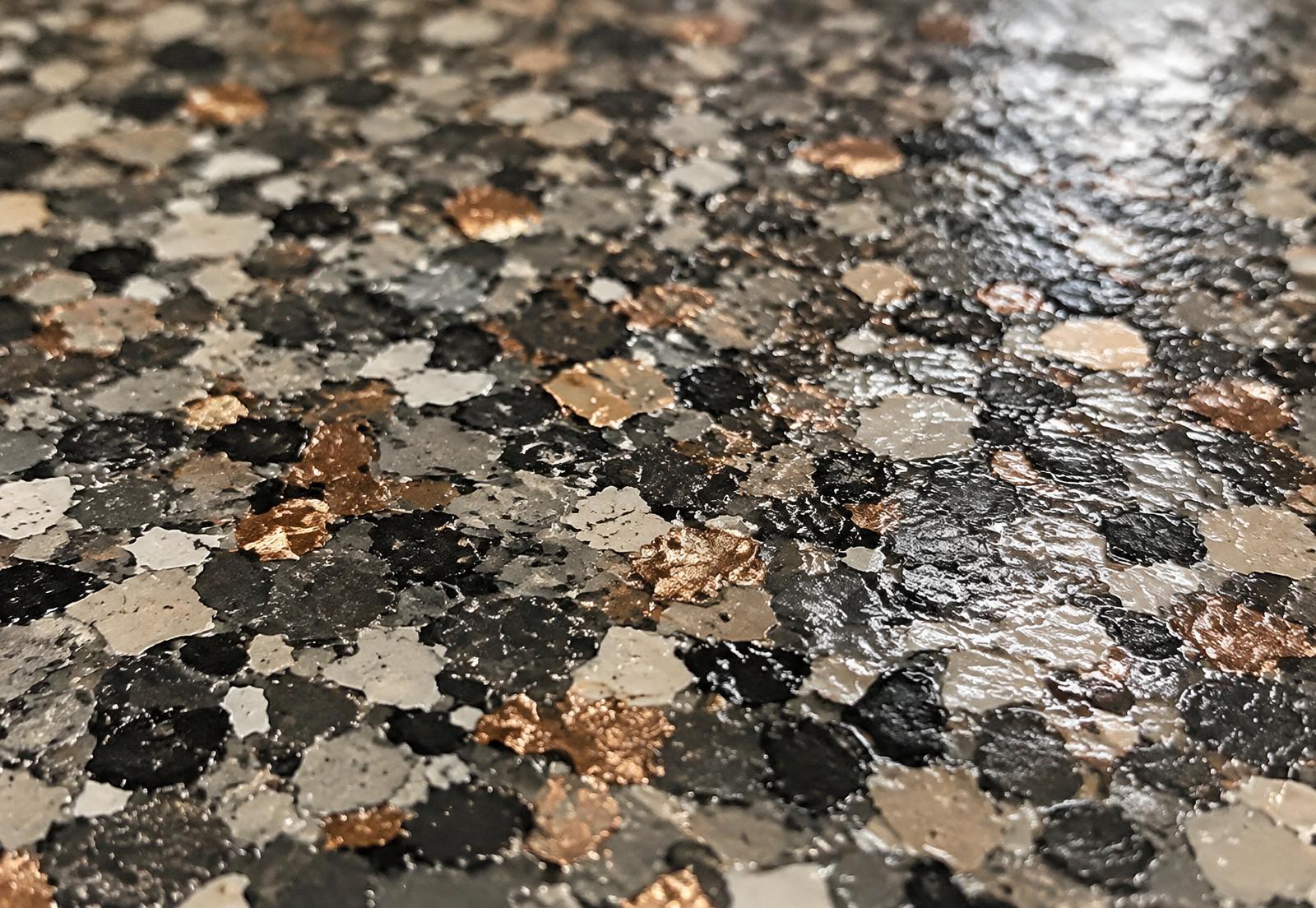
01Preparation & system selection
It starts with the slab
- Polyaspartic is usually one part of a complete system, for example over an epoxy base coat or a flake broadcast, rather than a standalone product.
- Fast cure times mean less working time, so preparation and application planning matter even more.
- Slab moisture, cracks and existing sealers influence whether a polyaspartic system is appropriate.
- We'll compare polyaspartic and epoxy options for your space and explain the trade-offs plainly.
- If polyaspartic isn't the right fit, we'll tell you and suggest an alternative.
02Applications
Where it's often considered
- Top coats over epoxy or flake base coats
- Garage floors where a shorter installation window matters
- Floors exposed to sunlight, where UV stability is a priority
- Projects where scheduling flexibility is important
03Design options
Finish and character
01
Clear top coat
Protects a decorative base layer, such as flake or color coats.
02
Pigmented
Some systems can be tinted for a solid-color finish.
03
Sheen & texture
Gloss level and optional anti-slip additives are selected with you.
Available finishes depend on the coating system selected for your space. We'll review options during your consultation.
04Practical benefits
What a coated floor can offer
- Faster cure
- Compared with many epoxies, polyaspartics typically cure faster, which can shorten installation windows.
- UV stability
- Many aliphatic polyaspartics are less prone to yellowing in sunlight than many epoxies.
- Wide temperature range
- Some products can be applied across a broader range of conditions; Arizona heat still requires careful planning.
- Pairs with other layers
- Often combined with epoxy base coats to balance build, appearance and schedule.
Performance varies with the coating system, slab condition and use.
05Installation overview
How the work typically unfolds
- 1
Suitability talk
Your floor, exposure and schedule.
- 2
Assessment
Slab condition and moisture review.
- 3
Preparation
Profiling, repair and cleaning.
- 4
Application
Coats applied within working-time limits.
06Questions
Frequently asked
01Is polyaspartic better than epoxy?
Neither is universally better. They have different properties, and many systems combine both. The best choice depends on your space, exposure and schedule.
02Does faster curing mean a one-day floor?
Not necessarily. Total time depends on preparation, repairs, floor size, number of coats and conditions. We'll give a realistic schedule for your project.
03Can I ask whether it suits my floor?
Yes. Choose Polyaspartic Coatings or Not sure yet on the quote form and describe your space; we'll discuss suitability with you.
NextRequest a quote
Let's Plan Your Flooring Project
Tell us about the space, the condition of the concrete and how you plan to use it. Every proposal is personalized to the project.